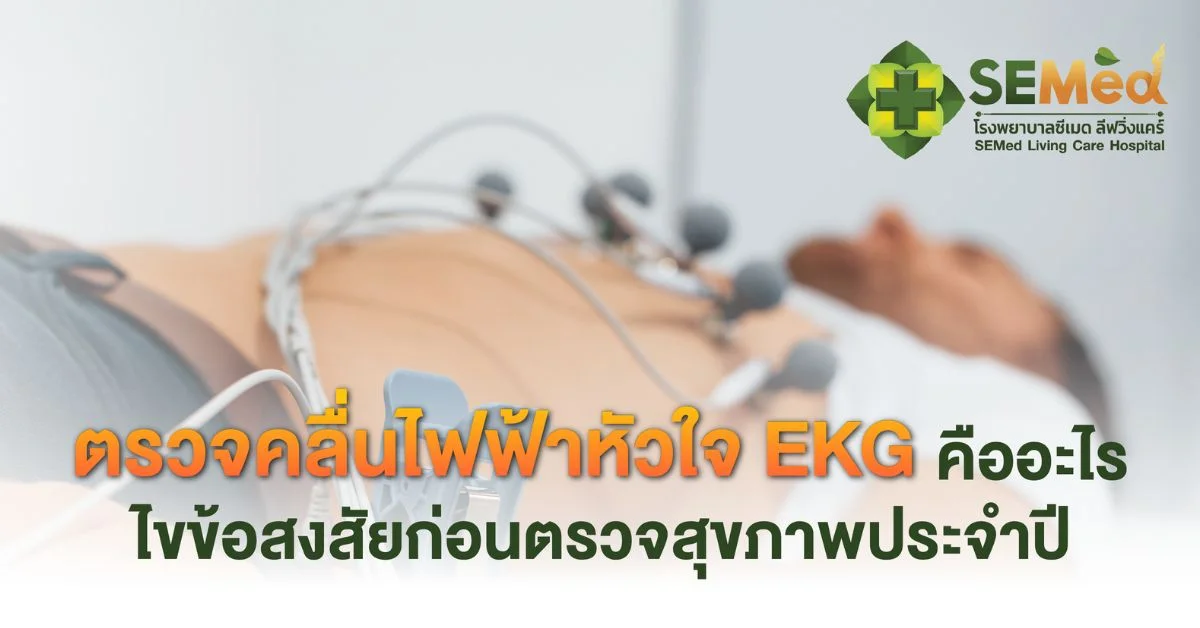
What Is an EKG? Purpose, Findings, and Cost
An electrocardiogram (EKG) is one of the basic tests doctors recommend, especially as part of an annual health check-up and a health check-up based on occupational risk factors, since heart disease is one of the leading causes of death among Thai people. According to Ministry of Public Health statistics from 2022, as many as 70,000 people died from cardiovascular disease, averaging 8 deaths per hour, and the trend is expected to keep rising each year.
Many people may wonder what an electrocardiogram can reveal, whether it hurts, and other questions. In this article, SEMed Living Care Hospital will answer common questions about the EKG test to help inform your decision.
What Is an Electrocardiogram?
An electrocardiogram, or EKG, is a test that measures the electrical signals the heart generates with each beat (the contraction and relaxation of the heart). The test uses a special device called an electrocardiogram machine, with electrodes attached to various points on the skin to record the electrical signals and display the results as a graph indicating the heart's normal function or abnormalities.
Doctors use this method to diagnose heart conditions because the heart's function is driven by electrical currents that control the contraction and relaxation of the heart muscle, which pumps blood to various parts of the body. Therefore, an EKG helps doctors assess the heart's function in detail.
What Can an EKG Reveal?
Doctors can assess heart health from the electrical waveform graph. An EKG can reveal a great deal of important information, from the heart's rhythm, to the structure or size of each heart chamber, to underlying abnormalities, including:
1. Basic Heart Function
EKG results can show whether the heart's rhythm is regular by recording the heart rate (normally 60-100 beats per minute) and the coordinated function of all 4 heart chambers.
2. Condition of the Heart Muscle
Doctors can assess the basic strength of the heart muscle, including its thickness, any ischemia (lack of blood supply), injury, or scar tissue that may have developed in the heart muscle.
3. Abnormalities That May Lead to Various Conditions
From the rhythm, heart rate, and function of the coronary arteries, doctors can identify abnormalities that may lead to conditions such as arrhythmia, pericarditis, cardiomegaly (enlarged heart), and coronary artery disease. Doctors may also recommend additional tests if the EKG graph shows abnormalities, for a more detailed examination and to identify the cause of symptoms promptly.
Many people may wonder why they should get an EKG if they have no symptoms of illness. However, the purpose of an EKG is to assess overall health and use the results to help diagnose a wide range of conditions, so it can indicate the tendency toward disease or abnormalities that a patient may have without realizing it, such as pericarditis or arrhythmia, which often show no clear symptoms.
Who Should Get an EKG?
An EKG can be performed on people of any gender or age, and should be done at least once a year as part of an annual health check-up. The following groups are considered at higher risk and should undergo an EKG:
- People aged 40 and above, or those with a family history of heart disease
- Those with symptoms that may indicate heart disease, such as palpitations, chest pain, or easy fatigue
- Those with high blood lipids, high blood pressure, high blood sugar, or diabetes
- Those who smoke or drink alcohol regularly
- Those who rarely exercise
Does an EKG Hurt? Is There Any Risk?
An EKG is a safe test that causes no pain, since it only involves attaching electrodes to the skin to receive electrical signals, with no instruments inserted into the body. You may only feel a slight coolness from the gel used to attach the electrodes.
In addition, patients can undergo an EKG without needing to fast from food or water, and no special preparation is required. The test also takes very little time, only about 5-10 minutes, making it suitable for people of any gender or age.
What Are the Steps of an EKG?
As mentioned above, an EKG takes only a few minutes, so the testing process is simple, as follows:
- Provide your first and last name to staff to confirm your information
- Remove any jewelry or metal objects from your body before the test
- Undergo the test, following the staff's instructions
There are also recommendations patients should follow: wear clothing that can be easily removed or opened at the chest for convenient testing, inform staff before the test if you have any cardiac assist device, and avoid exercising or engaging in activities that affect your heart rate before the test.
How Much Does an EKG Cost?
The cost of an EKG varies by medical facility. It is generally included in annual health check-up packages, with the price depending on factors such as the type of facility (public/private hospital), the selected check-up package, any promotions running at the time, and available insurance coverage such as social security or health insurance.
Summary An electrocardiogram is a fundamental test that plays a crucial role in screening for and monitoring various heart conditions. It is also easy, quick, safe, and painless, making it ideal for annual testing, especially for those at risk or aged 40 and above. Regular testing helps doctors detect abnormalities from an early stage, allowing for effective treatment planning and reducing the risk of complications that may arise.
SEMed Living Care Hospital Offers Comprehensive EKG Services
SEMed Living Care Hospital is a full-service provider of occupational health check-ups, offering pre-employment health check-ups, including check-ups based on occupational risk factors, ECG testing services, and off-site health check-up services for workplaces nationwide. With knowledgeable and experienced staff, standardized medical equipment and instruments, and technology-driven data management, we ensure accurate, fast results delivered according to each patient's needs — with results also viewable through our online system.
We are ready to provide academic health information to workplaces, covering topics in both general health and occupational medicine, offering health consultations and attentive, prompt, and efficient service so that every customer is satisfied and gains the greatest benefit.
Whenever you think of a health check-up.. think of SEMed Living Care Hospital. We never stop working towards sustainable good health.
For more information
Tel.: 0-2199-2111 ext. 161, Marketing Department
or 081-358-6493 (Khun On), 086-368-5317 (Khun Ice)
Email: [email protected]
LINE: @semed
Facebook: SEMed living care hospital