Lung Function Test
Spirometry
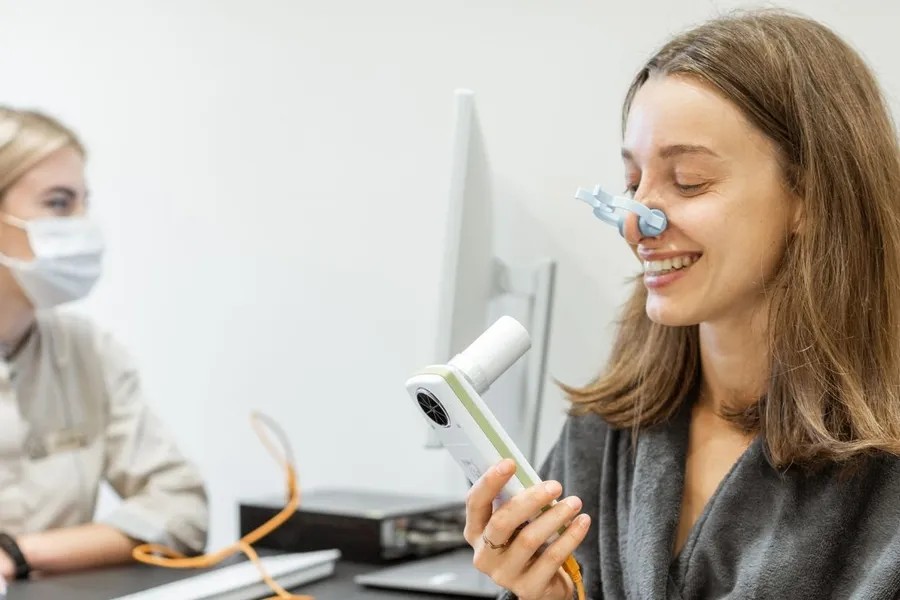
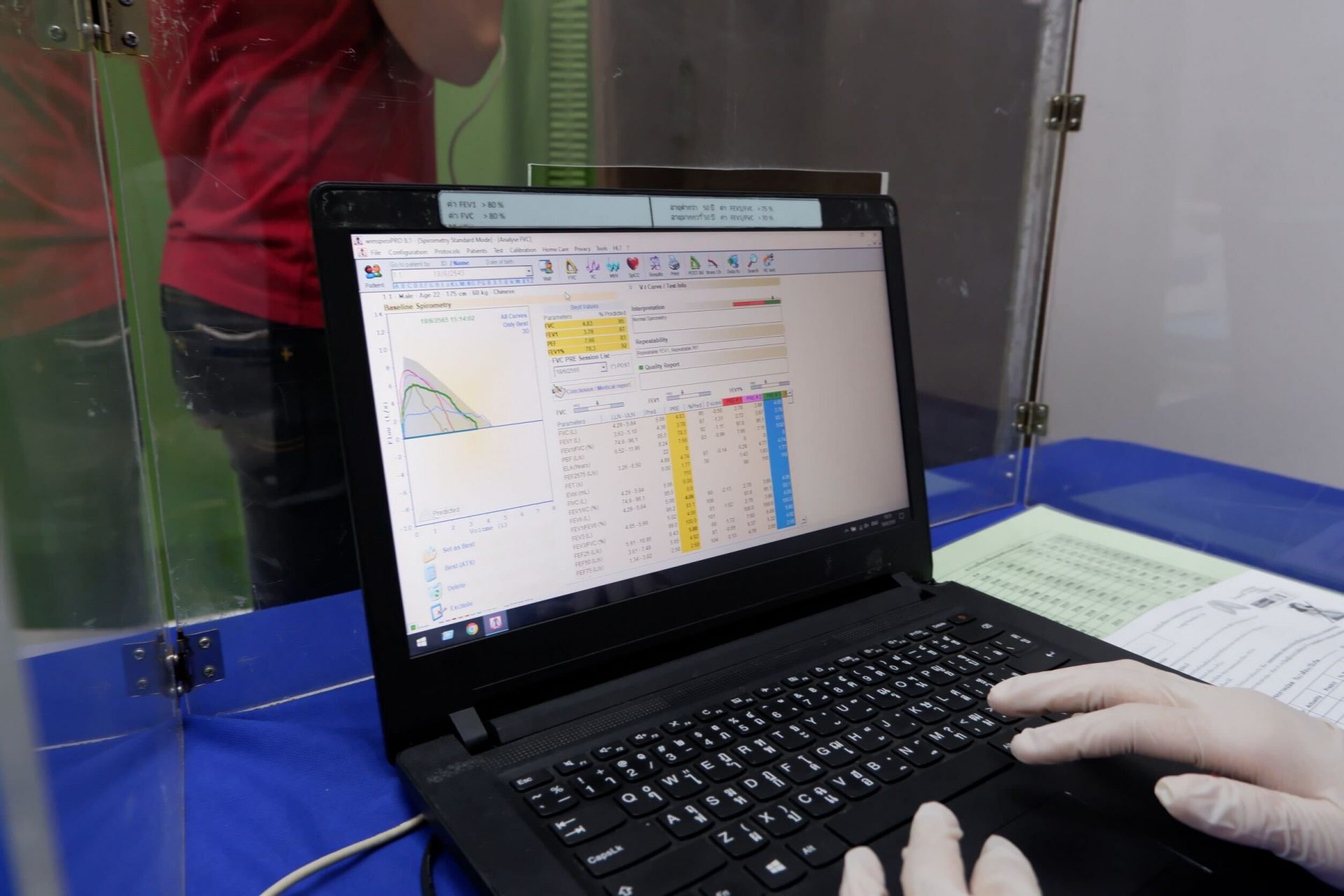
Spirometry evaluates respiratory efficiency and airway performance, helping physicians understand how effectively the lungs receive and expel air
Benefits of This Test
- Screen for and diagnose asthma, COPD, emphysema, and occupational lung disease — often before symptoms appear
- Assess disease severity to guide treatment planning for diagnosed patients
- Monitor treatment effectiveness, including bronchodilators and pulmonary rehabilitation
- Evaluate the impact of risk factors such as PM2.5, tobacco smoke, and workplace chemicals
- Assess fitness for surgery in certain pre-operative cases
- Detect declining lung function before shortness of breath develops
Testing Procedure
1. Confirm Identity
Staff verify your information before the test
2. Position
Stand or sit upright with your head slightly elevated
3. Full Inhalation
Breathe in as deeply as possible
4. Mouthpiece
Insert the mouthpiece with a firm lip seal to prevent air leaks
5. Forceful Exhalation
Exhale forcefully and quickly for at least 6 seconds while pinching your nose
Tips for the lung function test
- Avoid eating a heavy meal for at least 1 hour before the test
- If you use a bronchodilator, you should stop before the test
Who should not take the lung function test
- Those who are pregnant or suspect they may be pregnant, or feel faint
- Those within 3 months of abdominal surgery
- Those with a respiratory infection or high blood pressure
- No exercise before the test