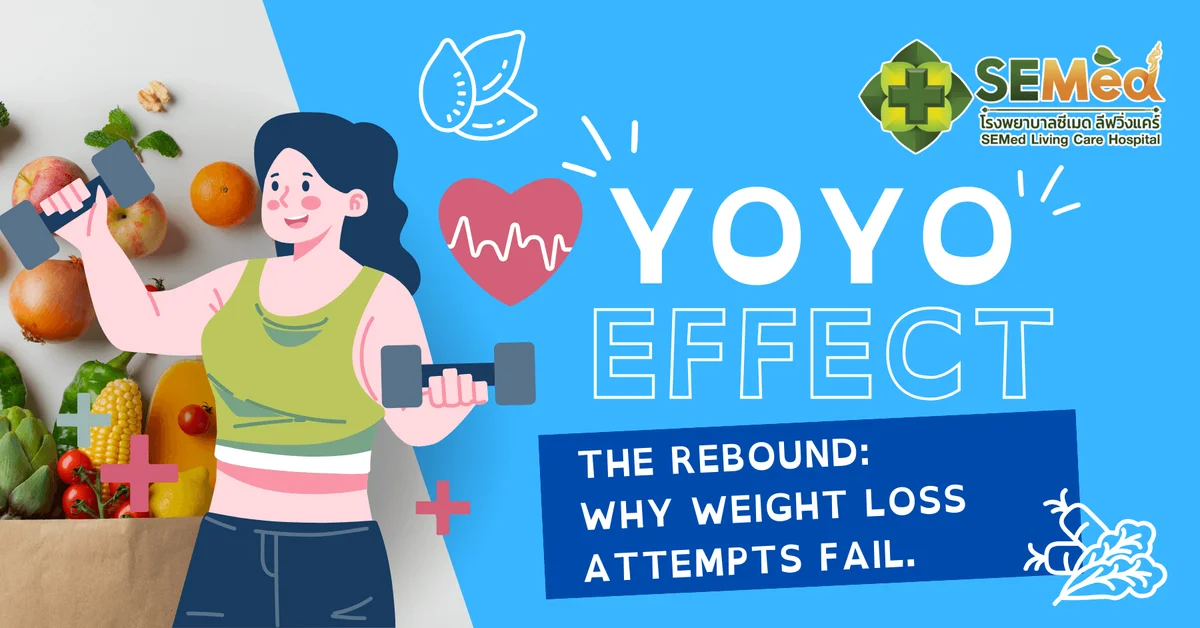
The Yo-Yo Effect: Why Weight Comes Back After Dieting
The Big Problem With Losing Weight the Wrong Way
Many people try to lose weight through severe fasting, keto diets, intense exercise, or inappropriate methods such as using weight-loss drugs that have not been medically approved. This can cause rapid weight loss, but ultimately the weight comes back even faster and higher than before. We call this phenomenon the “Yo-Yo Effect,” which is a significant problem that not only affects body shape but also damages long-term health.
Causes of the Yo-Yo Effect
1. Losing weight too quickly and unsustainably
- When the body severely lacks energy, the metabolism slows down (Metabolic Adaptation)
- Muscle mass decreases, causing the body to burn less energy
- Weight drops quickly at first, but comes back once normal eating resumes
2. Hunger hormones and appetite control
- When the body loses weight rapidly, the hormone Leptin, which controls satiety, decreases
- The hormone Ghrelin, which stimulates hunger, increases, making you feel hungrier
- The result is a feeling of intense craving, leading to eating even more than before
3. Yo-yo behavior from losing weight the wrong way
- Fasting → weight loss → slower metabolism → eating more again → weight gain greater than before
- The cycle repeats until the body finds it easier to store fat and harder to lose weight than before
The Correct and Sustainable Way to Lose Weight
1. Lose weight gradually and naturally
- Set a weight-loss goal of about 0.5-1 kilogram per week to allow the body to adjust
- Avoid rapid weight loss, which often causes the body to lose muscle instead of fat
2. Balance energy intake appropriately
- Choose foods that provide energy appropriate to your activity level and metabolic rate
- Calculate your TDEE (Total Daily Energy Expenditure) and reduce intake by 300-500 kcal per day below that amount
3. Focus on eating nutritious food
- High protein: helps maintain muscle mass and increase metabolism (e.g. fish, eggs, tofu)
- Complex carbohydrates: do not spike blood sugar and reduce appetite (e.g. brown rice, whole grains)
- Healthy fats: help you feel full longer (e.g. avocado, nuts, olive oil)
4. Exercise appropriately
- Focus on weight training to preserve muscle and increase metabolic rate
- Do moderate cardio, such as brisk walking, swimming, or cycling, to help burn fat
5. Build sustainable habits
- Practice mindful eating
- Get enough sleep, as rest affects hunger hormones
- Reduce stress, as stress affects eating behavior and fat storage
Losing weight isn't just about lowering the number on the scale — it's about building better health. Using the wrong weight-loss methods can lead to the “Yo-Yo Effect,” making the body store fat more easily and worsening overall health. The best approach is sustainable weight loss achieved by adjusting eating habits, exercising, and building good health habits.
We are ready to provide academic support to workplaces on a range of health and occupational medicine topics, offering health consultations and attentive, prompt, and effective service so that every customer is satisfied and gains the greatest benefit.
Whenever you think of a health check-up, think of SEMed Living Care Hospital. We never stop working towards lasting good health.
For more information
Tel: 0-2199-2111 ext. 161, Marketing Department
or 081-358-6493 (Khun On), 086-368-5317 (Khun Ice)
Email: [email protected]
LINE: @semed
Facebook: SEMed living care hospital
Source: Dr. Premkamon Pattaritikun
Mahidol University, Faculty of Medicine Siriraj Hospital, Golden Jubilee Medical Center