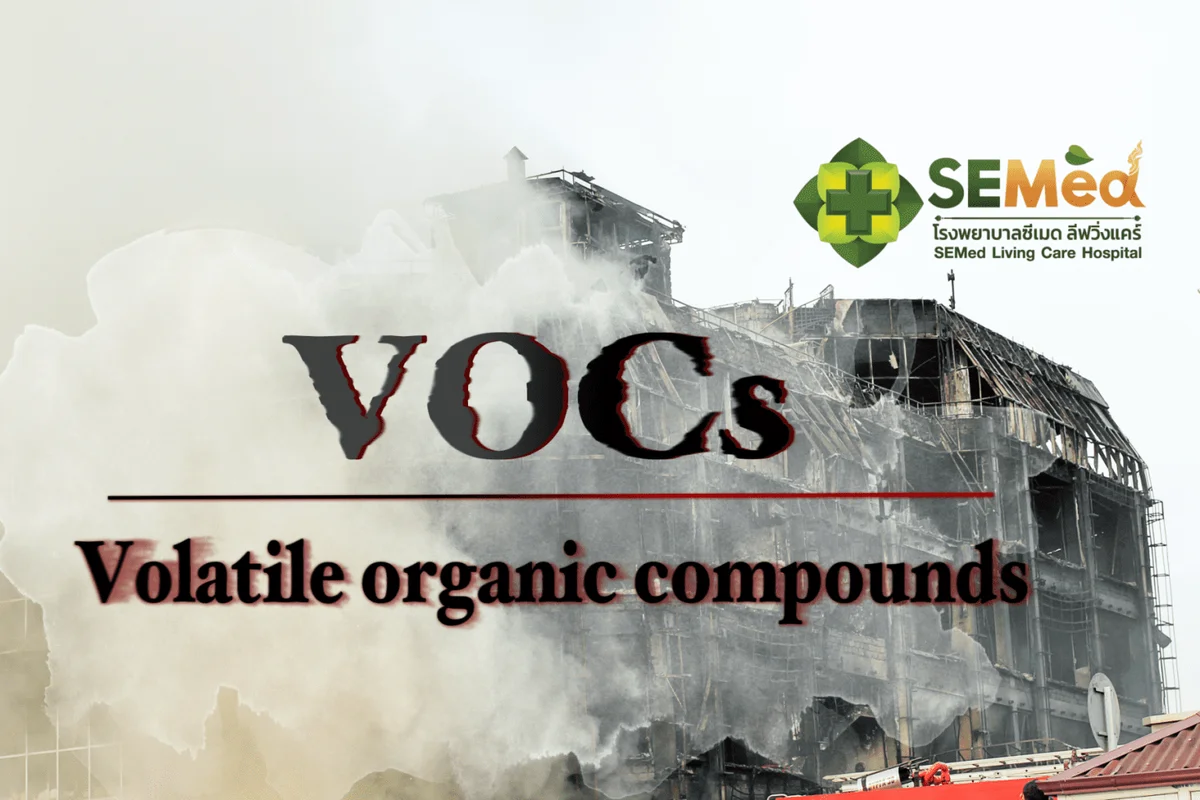
Volatile Organic Compounds (VOCs)
Volatile Organic Compounds (VOCs)
Commonly known as VOCs, these are a group of organic compounds that evaporate easily and disperse into the air at normal temperature and pressure. Their main components are carbon and hydrogen atoms, along with other elements such as oxygen, fluoride, chloride, bromide, sulfur, and nitrogen.
Volatile organic compounds (VOCs) in the atmosphere are classified as toxic air pollutants. In daily life, we are exposed to this type of substance from many products, such as house paint, cigarette smoke, bleaching agents, printing solvents, auto paint shops, industrial factories, dry-cleaning solvents, hair dye and perming solutions, pesticides, substances produced by combustion, and contamination in air, drinking water, food, and beverages. They are commonly used in factories that use solvents, such as plastics factories, oil refineries, petrochemical plants, shoe factories, furniture factories, and automobile assembly plants.
VOCs cause ozone from the upper atmosphere to descend into the layer of air near the earth's surface, and this ground-level ozone is harmful to humans, causing illness, malaise, sore throat, breathing difficulty, and irritation of the eyes, cornea, nose, throat, chest, coughing, and headache.
Health Effects of Volatile Organic Compounds
Acute Toxicity
Exposure to high concentrations of benzene through inhalation results in central nervous system depression, irregular heartbeat, lethargy, dizziness, blurred vision, rapid breathing, headache, palpitations, confusion, unconsciousness, and death due to respiratory failure.
Chronic Toxicity
Toxicity from long-term exposure to low concentrations of benzene can affect blood products, such as reducing red blood cells, white blood cells, or platelets, and lowering immune function, and may cause mild headache, nausea, loss of appetite, and stomach discomfort. In cases of severe toxicity, fatigue, blurred vision, and difficulty breathing may occur.
Effects on the Immune System
This disrupts or damages the immune system, reducing the body's ability to fight infection. For example, population studies through blood and skin tests among people living near hazardous waste disposal sites found higher levels of these substances in their blood compared with people living farther away, with a clear difference: the longer someone lived in the area, the higher the exposure. In addition, white blood cell counts among the population living near hazardous waste sites were lower than among populations living farther away.
Effects on the Nervous System
Exposure to volatile organic compounds causes various central nervous system depressant effects, such as drowsiness, dizziness, depression, or unconsciousness, and these effects become more pronounced with greater exposure.
Reproductive Toxicity
Women exposed to high concentrations of benzene through inhalation may experience effects on the reproductive system, including reproductive impairment such as irregular menstruation due to reduced ovarian size, and difficulty conceiving due to injury to reproductive organs. However, research on this remains fairly limited.
Other Health Effects
- Volatile organic compounds may also affect other body systems, including the genetic system and the hormonal system, potentially causing certain types of cancer and reproductive system diseases such as infertility, birth defects, and gender abnormalities
- The extent to which volatile organic compounds affect health depends on the chemical properties of the substance, the amount received, the body's biological condition, and other factors
- Receiving a large amount can damage the central nervous system by depressing it, which may cause immediate symptoms and lead to unconsciousness
- In cases of receiving small amounts of VOCs over a long period, this can lead to chronic problems, potentially causing cancer and degeneration of internal tissues and organs
How to Protect Yourself From the Dangers of Volatile Organic Compounds
- Reduce and avoid using products high in volatile organic compounds, such as choosing new products that are VOC-free
- Avoid foam or plastic containers when heating food in the microwave
- Quit smoking
- Ventilate your home
- Use an air purifier
- Avoid heavy traffic as much as possible
People at higher risk of harm from volatile organic compounds than the general population include those with respiratory conditions such as asthma, young children, the elderly, and those who are highly sensitive to chemical exposure. In addition, working people in general, as well as those living near sources of volatile organic compounds, are also at risk.
Source: Bureau of Environmental Health, Department of Health, Ministry of Public Health
Thai Health Promotion Foundation (ThaiHealth)
For more information, please contact
Tel.: 0-2199-2111 ext. 161, Marketing Department
Or 081-358-6493 (Khun On), 086-368-5317 (Khun Ice), Email: [email protected]
LINE: @semed
Facebook: SEMed living care hospital