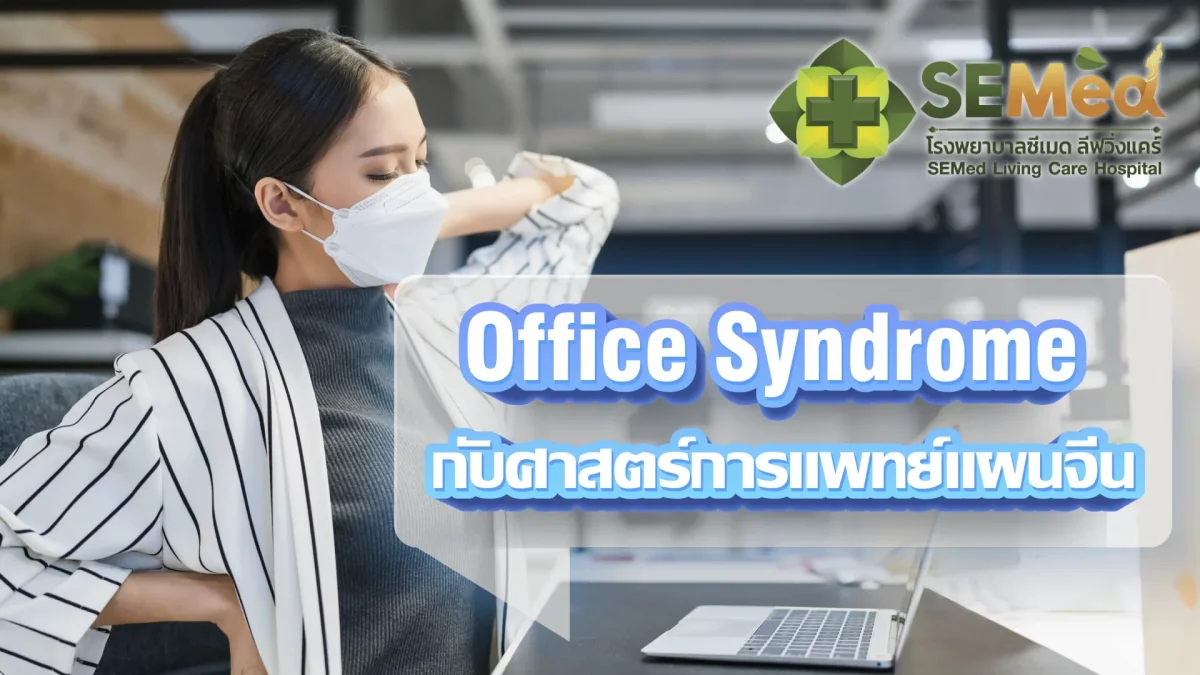
Office Syndrome and Traditional Chinese Medicine
Office Syndrome and Traditional Chinese Medicine
What Is Office Syndrome? Let's Get to Know It
This is a condition that more and more modern people are experiencing, due to changing lifestyle habits. In the past, people tended to be more active, engaging in walking, movement, and physical labor. Now, this has shifted to prolonged work or extended smartphone use, causing us to use the same muscle groups repeatedly over long periods, resulting in muscle inflammation and pain in various parts of the body, especially the neck, back, shoulders, arms, and wrists. This pain can progress into chronic pain if left untreated for a long time, potentially worsening into migraine-like headaches or other musculoskeletal disorders, such as cervical spondylosis or a herniated disc pressing on a nerve. Anyone experiencing symptoms like these may be developing Office Syndrome.
How Office Syndrome Is Treated
This involves inserting small, thin needles into specific acupuncture points on the body — a safe and effective method. Acupuncture helps reduce the release of inflammatory substances such as substance P, prostaglandin, and cyclooxygenase-2 (COX-2), improves blood circulation to painful or numb muscles, and helps balance hormones such as endorphins. Each acupuncture session takes about 30 minutes, and patients may feel a tight or heavy sensation at the needle insertion points. Some patients may also have electrical stimulation devices or heat lamps applied to warm the needles, after which the needles are removed.
Treatment Duration
Treatment is typically continued once or twice per week, for a total of ten sessions.
What Are the Pros and Cons of Using Acupuncture to Treat Office Syndrome?
Pros: Reduces the amount of medication needed, such as pain relievers, for patients with stomach or kidney conditions, since it treats the underlying cause of pain precisely by stimulating the body's own deep mechanisms.
Cons: May cause soreness or bruising for 2-3 days after treatment.
Preparing for Acupuncture Treatment for Office Syndrome
- Eat 1-2 hours before receiving acupuncture, as receiving acupuncture while fatigued, hungry, or overly full increases the chance of feeling faint, dizzy, or lightheaded
- Relax and get adequate rest and sleep the night before your acupuncture appointment
- Wear comfortable clothing that isn't too tight
Precautions
Complications that can occur after acupuncture include:
- Pain, bruising, or bleeding at the needle insertion point, with higher risk especially in those with bleeding disorders or those taking blood-thinning medications such as Warfarin
- Infection, such as hepatitis virus or HIV, which can occur if unsterilized needles are used or needles are reused
- Internal organ injury, especially to the lungs, which can occur if needles are inserted too deeply, though this is very rare with experienced doctors
- Effects on patients using pacemakers, since electrical stimulation may be used during acupuncture, which could interfere with the pacemaker's function
- Effects on pregnant patients, since certain forms of acupuncture may stimulate the uterus and affect childbirth
Most importantly, treatment should be performed at a proper, standard-compliant hospital or clinic by a qualified doctor to ensure the safety of the patient's life and well-being.
By Dr. Teerawut Chansirichareonkul
Mahidol University, Golden Jubilee Medical Center