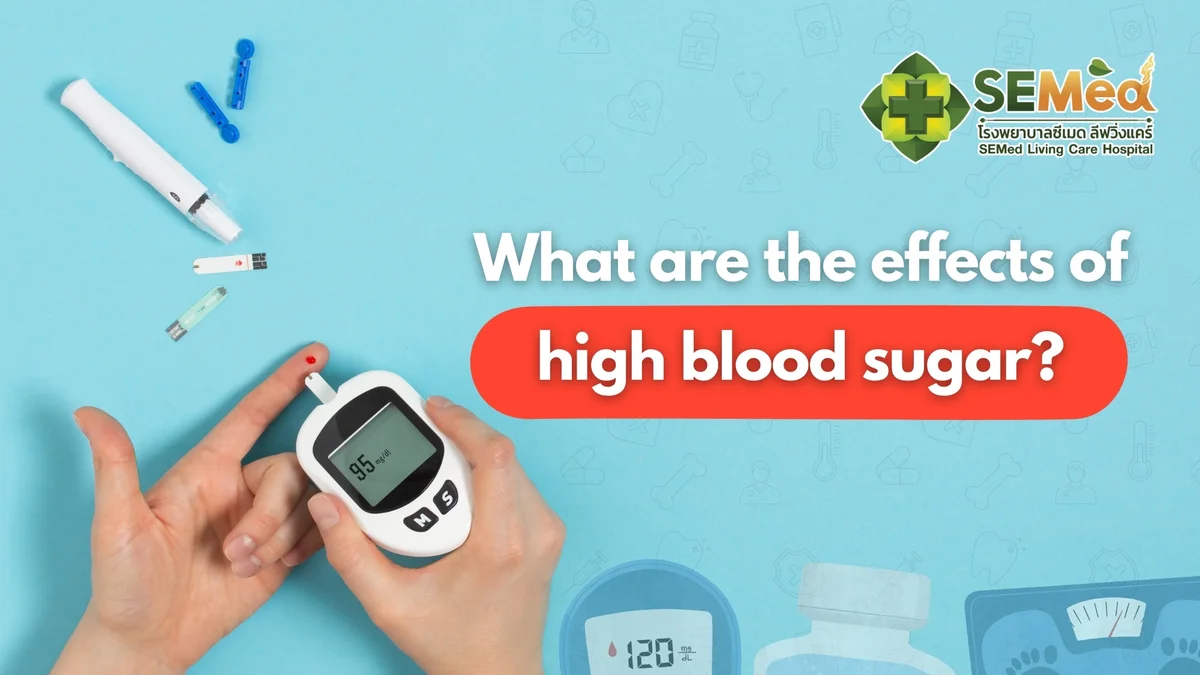
High Blood Sugar: An Early Warning Sign Before Diabetes
If you love sweet or starchy foods, you need to be extra careful — enjoying tasty food can raise your risk of high blood sugar, which can lead to diabetes.
What Is High Blood Sugar?
High blood sugar refers to a condition in which blood sugar levels exceed 100 milligrams/deciliter. Normally, everyone has some sugar in their blood, since the body needs sugar and must transport it through the bloodstream to various organs.
Causes of High Blood Sugar
- Genetics Family history is a major cause — having parents with diabetes further increases the risk of high blood sugar
- Obesity A body mass index over 25 is considered obese and carries an increased risk of diabetes
- Lifestyle habits Eating starchy or fatty foods or high-sugar drinks, along with lack of regular exercise, are behaviors that increase the risk of diabetes
What Happens to the Body When Blood Sugar Is High
If blood sugar is only slightly elevated, there are usually no abnormal symptoms yet. But when blood sugar rises significantly, it begins to affect the body's organs, and if it remains elevated for a long time, it can cause organ damage — for example, the kidneys, a condition known as diabetic nephropathy, where patients may need dialysis, or the eyes, known as diabetic retinopathy, where patients experience blurred vision, loss of sight, and potentially blindness.
In addition, diabetic patients are also more prone to heart disease and stroke, numbness in the hands and feet with a pins-and-needles sensation, and poor blood circulation to various parts of the body, especially the legs and feet. As a result, wounds heal slowly, which is why diabetic patients with foot wounds often end up requiring amputation.
How High Does Blood Sugar Need to Be to Meet the Diabetes Criteria?
The criteria for diagnosing diabetes is as follows: after fasting from food and water in the morning, if a patient's blood sugar level still exceeds 126 milligrams/deciliter, they are diagnosed with diabetes. If the level is between 100-126 milligrams/deciliter, it is considered prediabetes or an at-risk condition. A normal person should have a fasting blood sugar level no higher than 100 milligrams/deciliter.
In addition to the familiar blood sugar test, there is another test called HbA1c, which measures average blood sugar levels over the past 3 months. A normal person should have a level no higher than 5.7%. If it is between 5.7-6.5%, this is considered prediabetes, and once it exceeds 6.5%, it is considered diabetes. This test is used to help find ways to lower blood sugar levels and adjust behavior appropriately.
4 Commonly Heard Symptoms Related to High Blood Sugar
Symptoms of high blood sugar can sometimes closely resemble everyday symptoms. What are these symptoms, and how can you tell which ones are actually abnormal?
- Symptom 1: Dry mouth, frequent thirst
True. When blood sugar is high, the body loses water through urination. Patients urinate frequently, causing the body to become dehydrated, which leads to frequent thirst. However, this generally feels no different from normal thirst.
- Symptom 2: Irritability, easily annoyed
Not true. Normally, high blood sugar does not directly cause irritability or short temper. However, people with high blood sugar are not in a normal physical state and may sometimes feel unwell, which can make them irritable. As for people who feel happier after eating sweets, this may simply be because eating a food they enjoy improves their mood.
- Symptom 3: Drowsiness
Not true. High blood sugar does not directly cause increased drowsiness. However, when blood sugar is high, it causes fatigue, lack of energy, and a desire to rest.
- Symptom 4: Frequent urination
True. This is because sugar in the blood passes to the kidneys, causing them to excrete more urine. A simple way to notice this is if you need to get up to use the bathroom 2-4 times a night — this can be a sign of diabetes. Normally, people get up to use the bathroom no more than 1-2 times a night. The number of times a person urinates per day is not fixed and depends on how much water they drink.
3 Ways to Take Care of Yourself to Prevent High Blood Sugar
High blood sugar can be prevented by changing both eating habits and lifestyle, as follows:
- Avoid foods with simple sugars, such as sweetened drinks, fruit juice, and sweets
- Reduce carbohydrate intake, such as limiting the amount of rice you eat
- Exercise regularly and avoid becoming overweight
If a patient's high blood sugar has progressed to diabetes and the doctor has prescribed medication, the patient must take the medication consistently and have follow-up check-ups every 3-4 months to see whether blood sugar levels are within the normal range. With proper behavior changes and good health care, there is a good chance of controlling the disease.
We are ready to provide academic support to workplaces on a range of health and occupational medicine topics, offering health consultations and attentive, prompt, and effective service so that every customer is satisfied and gains the greatest benefit.
Whenever you think of a health check-up, think of SEMed Living Care Hospital. We never stop working towards lasting good health.
For more information
Tel: 0-2199-2111 ext. 161, Marketing Department
or 081-358-6493 (Khun On), 086-368-5317 (Khun Ice)
Email: [email protected]
LINE: @semed
Facebook: SEMed living care hospital
Source: Asst. Prof. Dr. Sira Korpaisarn, Division of Endocrinology and Metabolism, Department of Medicine, Faculty of Medicine Ramathibodi Hospital, Mahidol University
Thai Health Promotion Foundation (ThaiHealth)