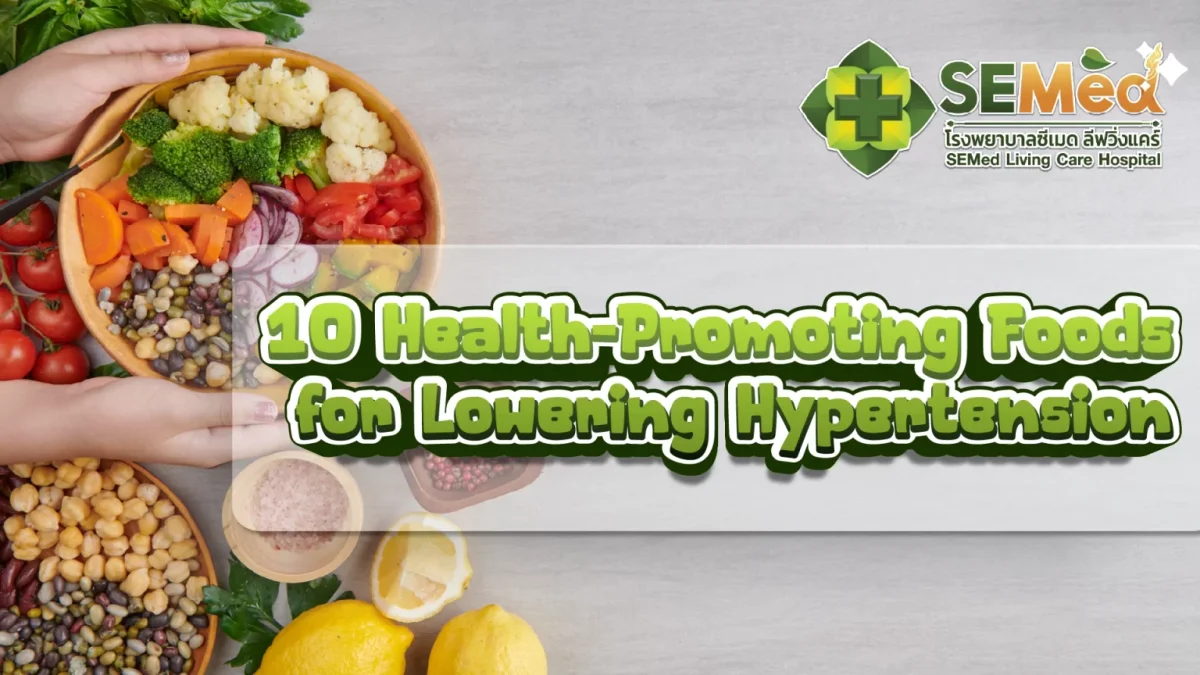
Know This! 10 Healthy Foods That Help Lower Blood Pressure
High blood pressure is a particularly dangerous condition, because in the early stages patients usually have few or no symptoms until more severe complications have already developed. High blood pressure is a chronic public health problem worldwide, including in Thailand, since the risk of high blood pressure is linked to age — the older you get, the higher your risk of developing high blood pressure becomes. Taking care of your health regularly is therefore very important.
What Is High Blood Pressure?
High blood pressure refers to the pressure within the arteries, generated by the contraction of the heart as it pumps blood to various parts of the body. Two values are measured, namely
– Systolic blood pressure:the blood pressure value while the heart contracts
– Diastolicblood pressure: the blood pressure value while the heart relaxes
For high blood pressure, the measured value will be greater than or equal to 140/90 mmHg, which can lead to various complications such as heart disease, cerebrovascular disease, or kidney failure, among others.
High blood pressure is most common among the elderly and is considered a chronic condition that requires careful self-care. In Thailand, a large number of people suffer from high blood pressure, so diet and nutrition play a very important role. Let's take a look at what people with high blood pressure should eat.
Dietary Principles for Preventing High Blood Pressure (DASH)
This means reducing consumption of foods high in sodium, saturated fat, total fat, and cholesterol, and increasing intake of dietary fiber, protein, calcium, and minerals such as potassium and magnesium, which studies have shown can help lower high blood pressure.
Source: Mahidol University
Recommended Proportions According to the DASH Diet
Various grains, focusing on whole grains, 7–8 servings (approximately 7–8 rice-spoon servings)
To increase dietary fiber intake, which aids bowel movement and reduces the risk of chronic disease
Vegetables and fruit, 4–5 servings each (approximately 4–5 rice-spoon servings of vegetables and 3 servings of fruit)
Increase intake of dietary fiber, vitamins, and minerals that help support the body's functions, focusing on fresh vegetables and fruit while avoiding canned or processed vegetables and fruit products
Low-fat meat such as fish, 2–3 servings (approximately 4–6 tablespoons)
Eat red meat in appropriate amounts; trimming the fat or skin off meat and choosing low-fat cuts helps reduce fat intake. In addition, increasing fish consumption boosts intake of omega-3 fatty acids, which help lower triglycerides and reduce inflammation, thereby helping protect blood vessels and nourish the heart
Oils or fats, 2–3 servings (or no more than 6 teaspoons)
Consuming too much fat can cause various diseases, but fat is still an essential nutrient that helps absorb fat-soluble vitamins and is a source of essential fatty acids the body needs
Various nuts
Such as almonds and peanuts, because various nuts contain good fatty acids, including omega-3, 6, and 9, but should not be eaten in excess. Although they are a source of good fat, they are also high in calories, so to benefit the body without gaining weight, about 30 grams or 2 tablespoons per day is recommended
For following the DASH diet, it is recommended to use herbs and spices to add flavor to food and reduce the use of salt or high-sodium seasonings in cooking.
For these reasons, the DASH Diet has been recommended by the American Heart Association as an approach to controlling high blood pressure.
In addition, a systematic review with meta-analysis confirmed the effects of the DASH Diet in more than 2,000 participants. Those who followed the DASH Diet for 2–24 weeks showed a significant reduction in blood pressure, total cholesterol, and LDL cholesterol, and a reduction in the 10-year risk of cardiovascular disease of up to 13 percent.
10 Foods Suitable for Patients with High Blood Pressure According to the DASH Diet
1. Whole grains Eat about 7–8 servings of whole grains to increase dietary fiber for bowel movement and to reduce the risk of chronic disease
2. Low-fatmeat Eat low-fat meat, such as red meat with the fat or skin trimmed off, to reduce fat intake, and increase fish consumption to get omega-3, which helps lower triglyceride levels, prevent inflammation, and support blood vessel health
3. Fresh vegetables and fruitIncrease intake of fresh vegetables and fruit to 4–5 servings, focusing on fresh, unprocessed vegetables and fruit as the main choice, to increase dietary fiber and various minerals, and avoid canned or processed fruit
4. Good fatsEat oil or fat in an amount not exceeding 6 teaspoons per day, focusing on foods with good fats, so that the body gets a sufficient amount of fat and this helps absorb fat-soluble vitamins
5. NutsandgrainsFocus on eating grainsand various nuts such as almonds, peanuts, and so on, to get good fats, but should not be eaten in excess since nuts are high in calories, so should not be eaten more than 30 grams or 2 tablespoons per day
6. RoselleResearch has found that roselle can help reduce high blood pressure because it contains anthocyanins, which help improve the function and strengthen blood vessels
7. CeleryPharmacological studies have found that celery has blood-pressure-lowering, diuretic, swelling-reducing, blood-sugar-controlling, fat-lowering, and anti-inflammatory properties
8. Garlic Garlic is a kitchen staple found in every home. Besides its spicy flavor that enhances dishes, garlic also contains an important compound called allicin, which helps lower blood pressure and blood fat
9. LemongrassAnother herb many people like to use in cooking, due to its many properties, including its diuretic and carminative effects and its ability to promote relaxation. It also helps reduce high blood pressure quite effectively
10. Andrographispaniculata A popular herb rich in medicinal properties. Research has found that compounds in andrographis paniculata have blood-pressure-lowering effects, help dilate blood vessels, and keep the heart rate from becoming too fast
7 Ways to Treat High Blood Pressure Through Lifestyle Changes
Treatment of high blood pressure in the elderly through lifestyle modification, following general clinical practice guidelines for treating high blood pressure, includes the following
- Control your body weight to stay within or close to the normal range
- Exercise. You should exercise for at least 30 minutes a day, at least 5 days a week; each day's exercise may be split into short sessions of 10 minutes, 3 times a day
- Limit sodium intake. You should consume no more than 2,300 milligrams per day, which can help lower blood pressure in both patients with and without high blood pressure
- Follow the DASH Diet eating plan
- Limit or abstain from alcoholic beverages
- Quit smoking. Quitting smoking may not directly lower blood pressure, but it can reduce the risk of cardiovascular disease
- Reduce stress, including relaxation and reducing anxiety
Diet is one important factor that helps with high blood pressure, but the most important factor is lifestyle modification, meaning changing your daily way of life toward nutritionally sound eating and appropriate physical activity, combined with good health behaviors such as not smoking and avoiding alcoholic beverages, among others.
Making long-term lifestyle changes is considered the cornerstone of preventing high blood pressure, and is also a fundamental treatment for all high blood pressure patients, whether or not they have an indication for medication. In cases where patients need to take blood pressure medication as well, lifestyle modification will increase the effectiveness of drug treatment.
Source: Mahidol University